





























While we’re very spoiled in the 21st century to have such a dazzling array of different tobacco products and smoking paraphernalia at our veritable fingertips, it hasn’t always been this way… and, in fact, there was once a time when tobacco wasn’t even known about on British soil.
It’s thought that tobacco first arrived in England in the balmy month of July 1586 on the arm of Sir Walter Raleigh, getting in off the boat fresh from Virginia.
As legend has it, one of his servants saw him smoking his pipe for the very first time and, thinking that he was on fire, threw water over him to put him out!
However, while this is the widely accepted date for English tobacco arrival, it’s likely that it had been around for a lot longer than this, with British sailors probably picking up the habit from Spanish and Portuguese sailors well before 1856.
But it was towards the end of the 16th century when tobacco use really started to become popular, with Queen Elizabeth I persuaded to give it a go in 1600… and, of course, if it’s good enough for royalty, then it’s good enough for everyone else!
By the early 1660s, there was no turning back and smoking had become commonplace from the top of the country to the bottom.
Fast forward to the Industrial Revolution…

Come 1760, or thereabouts, the Industrial Revolution began to take hold, marking a significant transition from manual rural economies to machine-driven urban systems, with key innovations including iron production advancements, textile manufacturing and the steam engine.
It was around this time that the little town of Kendal in the Lake District started to make a name for itself as one of the nation’s major tobacco and snuff hubs.
Why was Kendal so important for the development of the tobacco industry?
Because it was one of the main transport hubs in England for packhorse teams, as well as one of the early adopters of water-powered mills and machinery for grinding tobacco, Kendal was perfectly placed to both make the product and then distribute it elsewhere.
Tobacco arrived from Maryland and Virginia in North America to the ports of Whitehaven, Workington and Maryport, where it was then transported to Kendal in packhorse trains.
Apparently, some 4.5 million pounds of tobacco was imported through Whitehaven alone between 1739 and 1740!
Kendal Brown snuff: Where it all began!

Before tobacco production really took hold, however, snuff was the name of the game, first brought to the region by Matthew Whittaker in 1740, who opened the first water-powered snuff mill in Kendal.
The product – dried tobacco leaves ground into powder to be sniffed, rather than smoked – was then adopted by Kendal’s own Thomas Harrison, who brought machinery from Scotland (after heading to snuff manufacturing centre Glasgow to hone his craft) to set up a snuff mill along the River Mint at Mealbank.
More than that, however, Mr Harrison also brought with him the recipe for Kendal Brown snuff, which some of the big-name brands out there still make today!
The exact formula for this particular snuff is actually kept under serious lock and key, held in a bank strong room in Kendal.
However, you can find a variant to try right here at Havana House, as we have Wilsons of Sharrow Kendal Brown snuff readily available to buy.
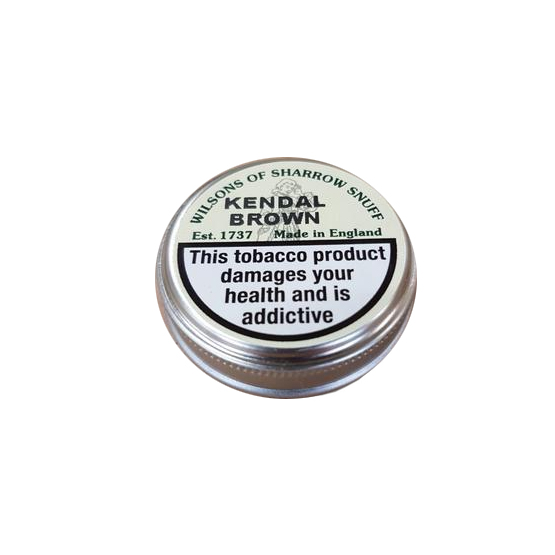
This traditional finely milled tobacco blend is prized for its rich and earthy aroma, and distinctive tobacco-forward profile, coupled with delicious hints of wood and spice – and it’s a great choice for anyone keen to discover the delights of snuff for themselves.
Key figures in Kendal tobacco manufacturing
Always looking to grow his business, Mr Harrison partnered with one Thomas Brocklebank to take it to the next level.
Upon his death, his son – also called Thomas Harrison – assumed responsibility of the company, working alongside Mr Brocklebank, and buying a house on Lowther Street in 1830 or thereabouts to use as both residence and tobacco factory.
His daughter Jane eloped in 1838 with Kendal native Samuel Gawith. Upon Thomas’s death in 1841, the business was left to Jane and her sister Ann, with Samuel taking up the trade.
Thus, Brocklebank & Gawith was born!
When Mr Brocklebank died, Samuel assumed full control of the business and, when Ann died in 1852, Samuel and Jane became full proprietors of the company and all associated properties.
As well as being a key player in the development of Kendal’s tobacco manufacturing industry, Samuel was also very prominent in the Kendal community, as a renowned businessman, of course, but also mayor of Kendal to boot.
Tragically, Samuel died in 1865 aged 48… not even one year after being elected mayor.
Because he was so forward thinking, however, he’d already put measures in place just in case and made his eldest son Samuel II one of three trustees, alongside Henry Hoggarth (his childhood friend) and John Thomas Illingworth (a valued Gawith employee).
The actual running of the company was down to Samuel and his brother John Edward, with the organisation known then as Samuel & John Edward Gawith, Tobacco & Snuff Manufacturers.
At around this time, John Illingworth left to set up his own rival company in Kendal, but this didn’t seem to have too much of an immediate impact on the Gawith brand, which continued to flourish for another ten years.
Ultimately, the Illingworth site was just not as successful as the Gawith company and, following bankruptcy, John sold out to his competitor.
Even more sadly, the Aynam Mills factory on Canal Head (opened in 1920) burned down in 1983. It was rebuilt, but the firm closed its doors for the last time in 1986.
So that’s the Gawith side of proceedings accounted for… but where does Hoggarth come into it?

Come 1878, brothers Samuel and John Edward had agreed to go their separate ways. Samuel chose to assume responsibility for the snuff mill, while John Edward opted to concentrate on tobacco production.
With interest in snuff being what it was, Samuel soon found his Meal Bank premises to be insufficient as a base of operations and commissioned a new factory on the other side of the River Kent.
And thus, Kendal Brown House was born, opening its doors for the first time in 1881.
What was Kendal Brown House?
Kendal Brown House was named after the company’s most popular snuff brand, a purpose-built factory that served as a manufacturing hub initially, but also as offices and as a tobacco processing centre later down the line.
The impressive building is still there and certainly worth a visit if you happen to find yourself in the Lake District at some point. And make sure to take a sniff of the air, as the sweet scent of tobacco is eminently discernible to all those who stroll down the street.
While Samuel continued to prosper, John Edward didn’t fare quite so well and later declared bankruptcy, selling all recipes and trademarks back to his brother.
Sadly, Samuel Gawith II died in 1886, with the company put into trust until his then two-year-old son Samuel III was old enough to take over in 1905.
Prior to this, however, Henry Hoggarth joined the firm in 1887, whereupon it was renamed Gawith, Hoggarth & Company.
Snuff manufacturing continued at the Lowther Street site until 2009 before moving to a new premises off Shap Road, with Kendal Brown House ceasing production in 2015.
However, its legacy is still very much felt in the township today – and, of course, Gawith Hoggarth continues to make incomparable tobacco and snuff products that are in demand all over the world.
What is Gawith Hoggarth Kendal Brown snuff like?
An excellent question and one certainly worth asking!
If you’ve never tried Kendal Brown snuff before, you can expect it to be:
- Coarsely ground
- Moist
- Dark brown
- Medium strength
- A natural tobacco experience
- Earthy
- Smoky
- Subtle florals & citrus undertones
- Easy to take
- Moderate nicotine hit
- Suitable for newcomers & aficionados alike
- Peaty quality
The evolution of Kendal pipe tobacco blends

So, we’ve covered the Kendal pipe tobacco origin story, with much of the focus on Kendal Brown snuff – but what of actual tobacco? Where does this come in?
Well, although snuff was a very popular and universal product up until around the 19th century or thereabouts (often said to cure all sorts of illnesses!), it’s now more of a niche luxury product that you don’t often see in use.
The industrialisation of cigarette production in the 20th century ultimately led to the rapid decline in snuff and by the 1960s, it had all but disappeared – although it’s enjoying something of a revival among tobacco enthusiasts today.
Many different tobacco blends have been developed by Gawith Hoggarth over the centuries, including:
1792 flake
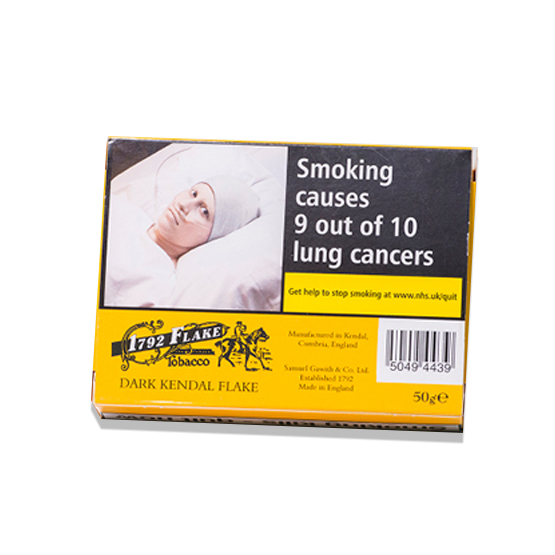
The process for making 1792 flake pipe tobacco is the same as it was in the 18th century, delivering a strong and full-bodied product that has been impressing smokers for years!
Full Virginia flake
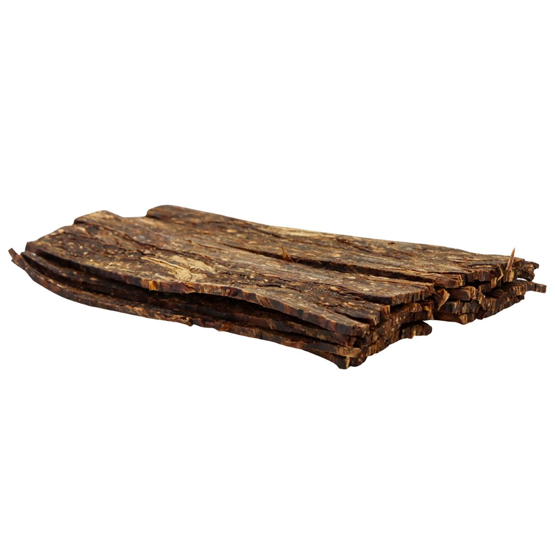
If you love pure pressed Virginia leaf, this is the Gawith Hoggarth product for you, a pipe smoker’s dream that’s both delicious and distinctive. Perfection!
Auld Kendal
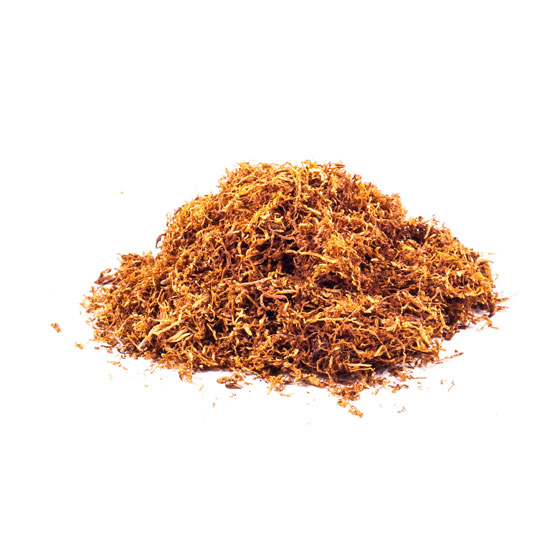
There are many different variants in the Auld Kendal range – and, in fact, this line represents the brand’s introduction to hand-rolling tobacco.
It’s simply a matter of trying them all to find your favourites! Might we suggest the Auld Kendal Virginia tobacco as a brilliant place to start.
Kendal Gold black cherry
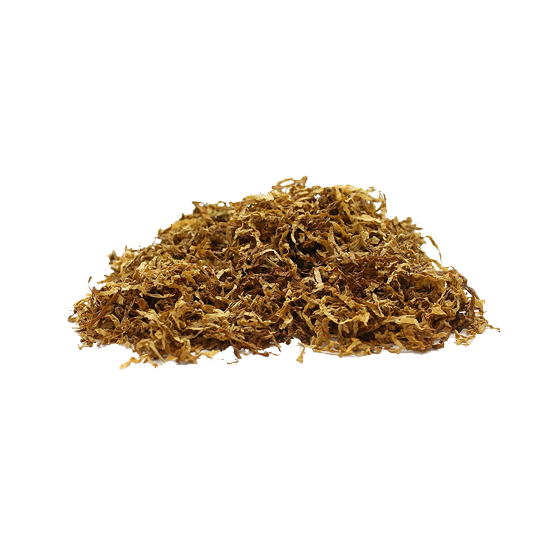
In recent years, Gawith Hoggarth has diversified its portfolio and brought out a stunning range of aromatic tobaccos, of which Kendal black cherry is just one. Give it a go – then see what others you can find!
There’s no stopping Gawith Hoggarth!
Now, while you might be forgiven for thinking that the peak years for Kendal pipe tobacco were in the late 19th and early 20th centuries, if there’s one thing we know about Gawith Hoggarth it’s that they don’t know how to quit!
The industry may well be old, but it continues to break new ground for tobacco products, with the Auld Kendal line of hand-rolling tobacco introduced in the 1990s, testament to the company’s innovative thinking and ability to pivot in line with changes in demand.
Long may it continue!