



























![Introducing The Diplomaticos Cancilleres: A Cuban Cigar & Rum Evening in Hove [15/10/26]](https://www.havanahouse.co.uk/wp-content/uploads/2026/09/Diplomaticos-Cancilleres-Product-Image1-300x300.jpg)

When you spark up that rollie or hold that weighty cigar in your hand, ready to indulge and luxuriate in some premium tobacco leaf, do you ever have a little ponder and ask yourself: “What is the history of tobacco in the UK and how did it become so popular?”
Just what exactly is the tale that lies behind one of the most heavily marketed and successful consumer products in all of human civilisation?
Well, as we recently touched upon, tobacco first landed on British soil back in the mid-15th century or thereabouts, but it took an additional 100 years or so before it really became popular among the common people… driven in large part by Queen Elizabeth I who, it was said, enjoyed a draw or two.
And, as we know, it’s shown no signs of stopping since then, with a cool $22 million now spent on advertising and promotions by tobacco and cigarette manufacturers each and every day!
But how exactly did we get to this point in time and how did the tobacco trade take hold initially?
When we think of trade centres in the UK, our thoughts – perhaps inevitably – turn to London, founded by the Romans as a major trading port and serving as the biggest empire in the world during the 18th and 19th centuries.
However, when it comes to tobacco, London had a most fierce competitor indeed, north of the border, in the form of the City of Glasgow.
The history of Glasgow tobacco merchants
Glasgow was a hugely important trade centre from the 18th century onwards, known as the Second City of the Empire during Victorian times because of its significant economic output, global trade connections and interest in shipbuilding.
This was all made possible because of the city’s strategic position on the River Clyde, providing it with access to important transatlantic trade routes with the Americas and the Caribbean, with ships able to sail down the river far inland.
After the Acts of the Union were passed in 1707 (one Scottish, one English), the two nations were merged into a single state to form the United Kingdom of Great Britain.
This gave Glasgow access to English colonies, which made it possible for Scottish merchants to pursue interests in a range of commodities… most prominently in tobacco.
This was further cemented by the French monarchy, which granted Glasgow merchants a tobacco importation monopoly in 1747 for the French territories – and, thus, the Glasgow Tobacco Lords were born!
Who were the Glasgow Tobacco Lords?
The Tobacco Lords of Glasgow were a group of 18th-century Scottish merchants who made their (significant) fortunes by trading in tobacco, propped up by the slave trade in the US.
These traders were so successful in their endeavours that they were able to live the life of Riley, mirroring their aristocratic counterparts and building all sorts of beautifully lavish homes for themselves.
This interest in tobacco led to an economic boom in Glasgow, but it did come at a cost and the triangular trade system – while making the Tobacco Lords incredibly wealthy – also saw millions of people sold into slavery.
What was the triangular trade system?
This transatlantic exchange system connected Europe and Africa with the Americas.
Manufactured goods (such as guns and raw materials like copper) were shipped from Europe to Africa in exchange for enslaved people, who were then transported to the Americas and the West Indies to work on tobacco, sugar and cotton plantations.
The ships then made their way back to Europe, carrying tobacco, rum and sugar.
The many thousands of people transported on these ships often suffered terrible conditions and mistreatment – and it’s estimated that 12 million enslaved people from Africa made it to American and West Indies colonies in this way.
4 famous Glasgow tobacco barons
John Glassford
John Glassford (1715-1783), originally from Paisley, was one of the wealthiest and most influential of all the Tobacco Lords, initially starting off in business as a textiles manufacturer before making the move into the tobacco trade.
He was also heavily involved in Glasgow’s civic and commercial governance, as a burgess and guild brother, as well as being a partner in two local banks and a founding member of the Glasgow Chamber of Commerce.
Glassford was the proud owner of 25 ships and was so successful that he was able to invest in some pretty serious properties in the city, including Shawfield Mansion – a commemorative plaque for which can be seen today on the wall at the junction between Trongate and Glassford Street.
A true symbol of wealth and elegance in 18th-century Glasgow, Shawfield Mansion was back then the most grandiose of all properties to be found in the city.
Glassford fell on hard times, however, when the American War of Independence started in 1775, which ultimately led to permanent changes in how tobacco trade was conducted… and saw this Tobacco Lord lose his fortune, dying in poverty with significant debt.
Andrew Buchanan
Andrew Buchanan (1690-1759) was one of the first of the Tobacco Lords to own his own tobacco plantation in the Americas, based in Virginia, and so successful he was at it that he also became known as one of the Virginia Dons.
By 1730, along with his two younger brothers, Buchanan had established his own firm – Andrew Buchanan, Bros & Co – which became the biggest tobacco importer in Glasgow.
Appointed Lord Provost twice, he was also one of the merchants who founded the city’s first bank in 1750 – the Ship Bank.
While there are many places in Glasgow that bear witness to this period of history, perhaps one of the most well-known is Buchanan Street, named after the Tobacco Lord who acquired five acres of ground with the aim of building a new street, the first part of which opened in 1780.
Much like the other Tobacco Lords, Buchanan made significant investments in property in Glasgow – and the city was fast becoming dominated by a ‘tobacco aristocracy’.
Virginia Mansion was built by the Buchanan family on land between Back Cow Lone (now Ingram Street) and Wilson Street, while an additional street was laid out (called Virginia Street, still in evidence today) that ran from the mansion gate to Argyle Street.
This property was later inherited by another Tobacco Lord – Alexander Speirs of Elderslie.
Alexander Speirs
Another of Glasgow’s major Tobacco Lords was Alexander Speirs (1714-1782), the son of an Edinburgh merchant who launched his smoking career in Virginia as a plantation owner.
By the 1750s, he was back in Glasgow and rose to prominence in the local community, getting heavily involved with the town council as town treasurer and town bailie, as well as helping to establish the Glasgow Arms Bank.
He was particularly interested in acquiring land and had the idea in mind of creating one large estate by investing in adjoining smaller properties… and he had the good fortune of inheriting Virginia Mansion, since he had married into the Buchanan family.
Unlike other Tobacco Lords (we’re looking at you, Glassford!), Speirs fared relatively well during the War of Independence, pivoting well in the face of declining tobacco import numbers as the conflict continued.
He diversified quite quickly, moving focus to the Caribbean to pursue trade in tobacco, sugar, rum and coffee, and was able to enjoy success as a result.
William Cunninghame of Lainshaw
The final Tobacco Lord we’ll feature is William Cunninghame (1731-1799), who first learned his trade as a teenager in Virginia, where he went to work as an apprentice on the plantation of one of the original tobacco barons, Andrew Cochrane.
In Virginia William remained until the 1760s, when he returned to Scotland and became a full partner in Cochrane’s business. So successful was he in his endeavours that the company name was later changed to William Cunninghame & Co!
Perhaps most interestingly, Cunninghame actually managed to increase his fortune because of the War of Independence – unlike his other tobacco counterparts.
As the story goes, he bought his partners’ shares in the firm for cheap… later going on to sell them for a significant profit!
How did the Tobacco Lords influence Glasgow’s Georgian architecture?
We’ve touched on some of the mansion houses and developments that the Tobacco Lords were able to build in Glasgow because of their commodity interests, but how else did they influence the architectural style and evolution of this Second City of the Empire?
And can any of these influences still be seen today?
As we know, these merchants were all very eager to display their wealth and social standing by constructing big, bold and brash mansions, which transformed the Glasgow landscape and saw the foundation of lots of new streets – often named after themselves (of course) or places in America where their fortunes were made.
Shawfield Mansion was one of the first to spring up, owned by Virginia trade pioneer Daniel Campbell.
It was later purchased by John Glassford, but the original building is no longer in pride of place, first sustaining damage during riots in 1725 before being rebuilt and then finally demolished. Similarly, Virginia Mansion was also built as another grand example of opulence and wealth.
But it wasn’t just extravagant residences that the Tobacco Lords invested in. They were also instrumental in the civic development of the city, constructing:
- St Andrew’s in the Square, the first Presbyterian church built after the Reformation and commissioned by the Tobacco Lords as an example of their wealth and power.
- St Andrew’s-by-the-Green, an Episcopal church built during the peak of the tobacco trade to serve the leading merchant class.
- Glasgow Museum of Modern Art, originally built by William Cunninghame as his own private townhouse before being used as a bank (when it was extended to create the Royal Exchange) and now serving as a wonderful gallery, ripe for exploration.
- Tobacco Merchant’s House, also known as Baillie Craig’s House, was designed by John Craig in 1775 as his own private home. It’s the last of the Georgian villas to still be standing in Merchant City and is now home to the Scottish Civic Trust.
Going on an architectural tour of Glasgow is certainly a must for anyone with a burgeoning interest in tobacco but it’s not just lavish houses that you can explore.
It’s also worth just walking the city streets, as well, since many of them were built by the Tobacco Lords and still bear their names today.
There are lots of guided tours you can go on or you can just explore off your own bat – but make sure that you include the Merchant City on your list of hotspots, since this is home to places like Virginia Street, Glassford Street, Miller Street, Buchanan Street, Jamaica Street and many more.
Where to go next?
It might make for uncomfortable reading and it’s certainly not pleasant to think about how dark the origin story behind one of our favourite pursuits is – but it’s not something that can be ignored and it certainly shouldn’t be shied away from.
In fact, it’s perhaps particularly important to bear the historical roots of our own tobacco use in mind when indulging in our favourite smokes.
What’s more, you could actually use your newfound knowledge to pursue an interest in ethical tobacco brands – and it seems that Philip Morris International (PMI) is one of the manufacturers now working to make corporate responsibility a priority.
Is Philip Morris International ethical?
Specific challenges that the company has been working on to become more sustainable include tackling illicit tobacco trades, managing social impacts, reducing its environmental footprint and providing fair and equal pay.
It also continues to progress in addressing child labour and improving agricultural living and working conditions, driving improvements including eradicating hazardous work carried out by children, providing protective equipment and delivering appropriate housing conditions for employees.
If you’re keen to try PMI tobacco brands, you’ve probably already heard of this one:
Marlboro Gold hand-rolling tobacco

This fine-cut blend from PMI is a premium high-quality tobacco that’s deliciously rich in flavour, delivers a perfectly smooth smoke and is one of our best-sellers here at Havana House, as well as being one of the most widely used tobaccos in the UK.
PMI alternative: British American Tobacco
Another option if you’d rather try something new is British American Tobacco (BAT), which works to ensure that human rights (including employee rights, rural poverty and child labour risks) are taken into consideration across multiple supply chains.
For example, it aligns its human rights management approach with the UN Guiding Principles for Business and Human Rights, supporting farmers to improve their livelihoods and address complex issues via a range of different initiatives.
BAT brands to consider taking home include:
Pall Mall hand-rolling tobacco

Another household name, Pall Mall fine-cut hand-rolling tobacco is made from the finest Virginia leaf, delivering a smooth, well balanced and intensely satisfying smoking experience. A winner if ever there was one!
American Spirit Blue hand-rolling tobacco
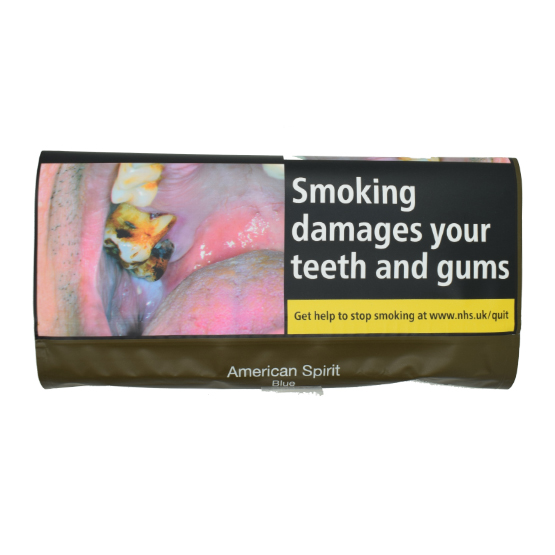
BAT acquired Reynolds American in 2017 and brought its American Spirit brand under the BAT umbrella – and American Spirit Blue hand-rolling tobacco is certainly an interesting one to try, made without chemical flavours, preservatives and additives.
Enjoy a rich smoking experience and smooth full-bodied taste, free from any harsh notes thanks to the ‘cleaner’ production methods.
American Spirit Yellow hand-rolling tobacco
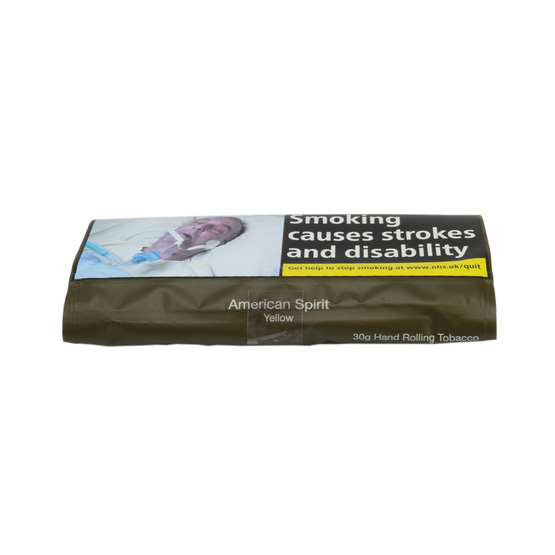
Once you’ve smoked American Spirit tobacco, there’s no going back! So you’ll be pleased to hear that there’s another variant you can try in the form of American Spirit Yellow hand-rolling tobacco.
This is a lighter version of the Blue, so would be a good choice for newcomers to smoking who don’t want such an intense experience at the beginning.
Give us a shout!
As ever, we’d love to hear more about your own smoking experiences and what new tobacco finds you’ve come across recently – so drop the Havana House team a call to let us know your latest discoveries… and if we’re missing something amazing on our virtual shop shelves!